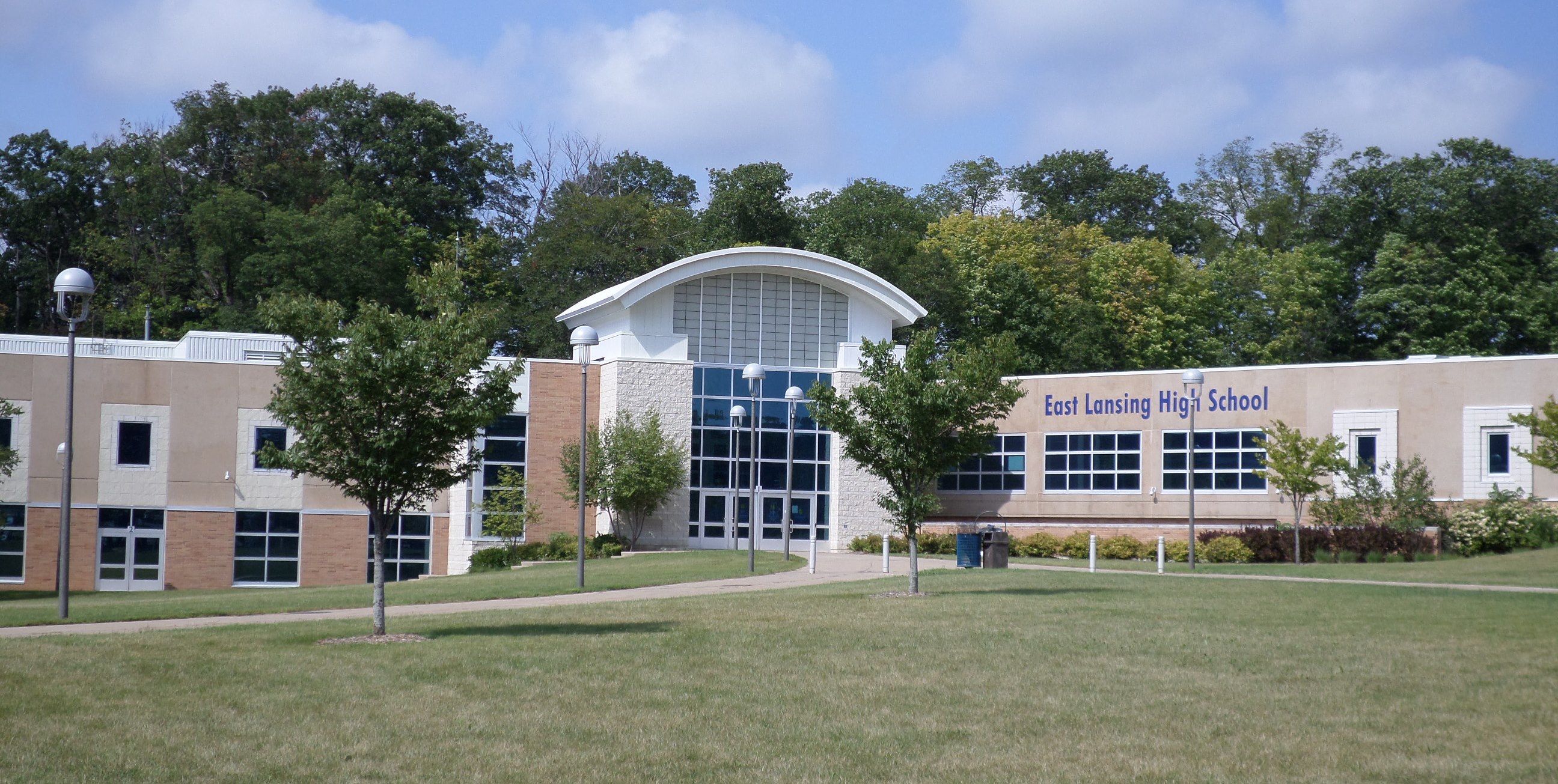
With East Lansing Public Schools opening the 2026-27 school year on Monday, Aug. 24, two ELPS educators who retired in 2025 say the classrooms families are sending their kids back to look nothing like they did a decade ago.
Tim Akers, who taught English at East Lansing High School from 2007 until retiring after the 2024-25 school year, and Claire Floyd, a special education teacher consultant at ELPS from 2001 until her 2025 retirement, detailed specific concerns in an East Lansing Info report published Thursday, Aug. 13: a color-coded AI policy that swings between outright bans and limited use, grade inflation that handed nearly a third of one graduating class a 3.9-or-higher GPA, and eighth-graders promoted to high school despite failing most core courses.
AI in the classroom: color codes and cat-and-mouse
ELPS classrooms display posters outlining when students can and cannot use artificial intelligence. Red days ban AI entirely; yellow days allow limited use. Akers compared the system to the post-9/11 terror alert color scheme.
But the policy came without training, Akers said.
"There's no meaningful instruction for us to learn how to incorporate AI effectively and ethically," he told East Lansing Info. "And if we don't know how to teach the kids how to use it, they're not gonna know how to use it."
Akers said he relied on Google Classroom's revision history to track student work. He described one student who completed a six-page essay in 13 seconds with a single cut-and-paste. The student's parents claimed the work had been drafted in a separate document with a sibling, but the student never produced it.
Students have since found a browser extension that retypes pasted text at human speed, making AI-generated work appear hand-typed. The district also provided a monitoring program called Securly, which Akers described as surveillance rather than teaching.
Grade inflation and social promotion
About two years before his retirement, Akers said, roughly 90 of 300 graduating seniors at East Lansing High School earned diplomas with a 3.9 GPA or higher. He called the figure evidence of rampant grade inflation and noted it mirrors a national pattern, pointing to Harvard's recent vote to cap the number of As professors can award.
Akers also said he was alarmed by the number of freshmen who had failed at least three of four core courses in eighth grade but were still promoted to ninth grade. He attributed loosening standards in part to administrators being quick to appease parents.
Special education perspective
Floyd, who began her career as a resource teacher in Mason in 1984, said the biggest shift she witnessed was in parental attitudes. Parents moved from being supportive and receptive to feedback to telling teachers what was best for their child.
Teachers are expected to teach social-emotional skills once handled at home, Floyd said. She comes from a long line of educators but told her own three children not to enter the profession.
An outside expert's take
Jed Magen, chair of the Department of Psychiatry at Michigan State University, warned in a May report published by MSU Today of "deskilling" — students losing the ability to perform tasks because AI does it for them — though he acknowledged the full impact on learning isn't yet well understood.
ELPS begins classes Aug. 24. The district has not publicly responded to the concerns raised by Akers and Floyd.