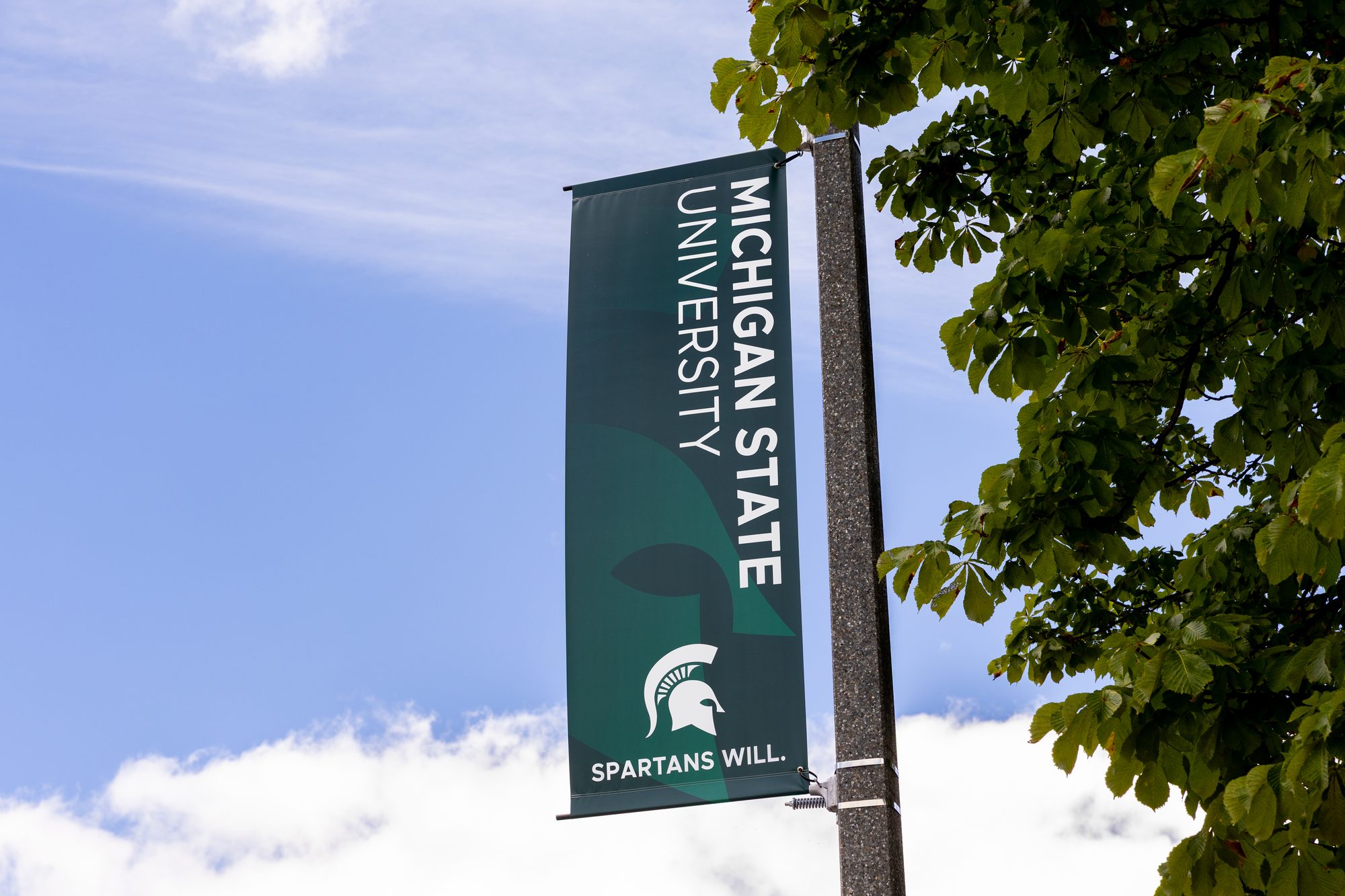
Michigan State University will lead a new $30 million research center focused on understanding and controlling turbulence, funded by the National Science Foundation.
The grant, announced Wednesday, Aug. 26, establishes TEMPEST (Transformative Explorations in Multi-Physics and Engineering of Scientific Turbulence), one of the NSF's Science and Technology Centers. Work begins Tuesday, Sept. 1.
Michael Murillo, a professor in both MSU's College of Engineering and College of Natural Science, will direct the center. He said the approach marks a shift from studying turbulence in isolated pieces.
"Our goal is not simply to understand turbulence better, but to make it predictable and controllable in ways that will enable new technologies and scientific discoveries," Murillo said in MSU's announcement.
TEMPEST brings together researchers from eight universities and three national laboratories. The partner universities are Auburn, Baylor, Georgia Institute of Technology, San José State, Texas A&M University-Corpus Christi, University of Rochester and Yale. Los Alamos National Laboratory, Sandia National Laboratories and Lawrence Livermore National Laboratory round out the consortium, along with industry partners Pacific Fusion and General Atomics.
The research targets practical problems: improving air travel, weather forecasting, energy systems and understanding plasmas in experimental fusion devices. MSU's engineering researchers will focus on applications for energy, transportation, aerospace and advanced manufacturing. Natural science faculty will develop new theories and mathematical frameworks explaining how turbulence emerges and evolves.
K-12 outreach
The center plans educational programs expected to reach more than 10,000 K-12 students annually through museum exhibitions, immersive media and hands-on programs. TEMPEST will also make its data and software publicly available and train what MSU described as an "AI-fluent scientific workforce."
Which local schools or districts will participate has not been specified.
Housing the center
TEMPEST will initially operate from MSU's Engineering Building. The center will move to the Leinweber Center for Engineering and Digital Innovation when that building is completed. Construction on the Leinweber Center began in February, with substantial completion scheduled by Dec. 31, 2028.
U.S. Sen. Gary Peters said the grant will strengthen Michigan's economy. "This center will … help bolster critical industries in our state and develop the highly skilled workforce Michigan needs to compete in a global economy," Peters said in a statement.
The NSF's Science and Technology Centers program, established in 1989, has supported 59 centers. Awards can reach up to $6 million per year, according to NSF.