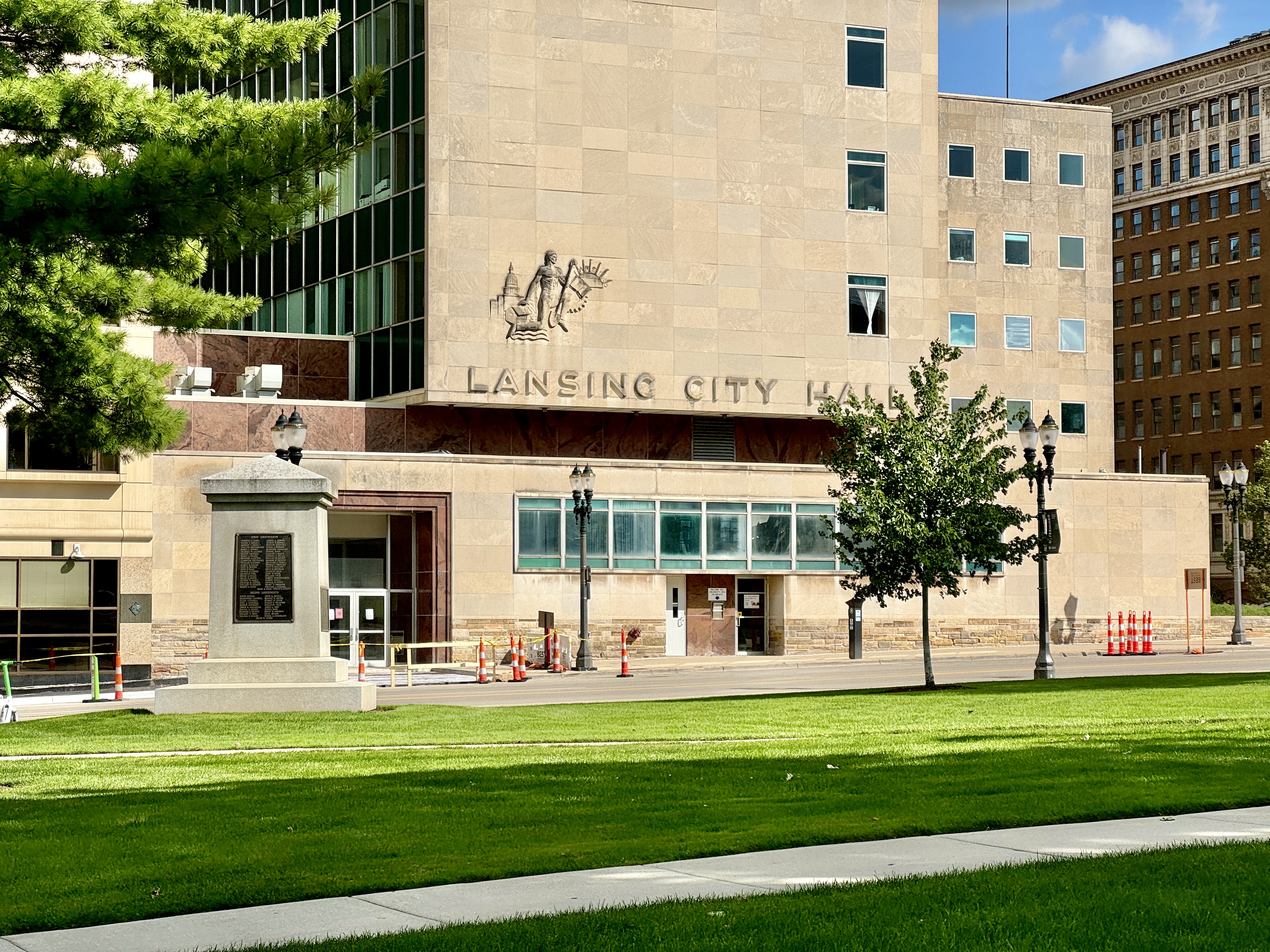
A Lansing City Council committee voted 3-0 on Tuesday, Sept. 15, to advance an ordinance that would require crypto kiosk operators to obtain city licenses and pass background checks.
The Committee on Equity, Diversity & Inclusion (EDI) set a public hearing for Monday, Oct. 12 on the proposal. If adopted, the ordinance would take effect Jan. 1, 2027.
Council Members Ryan Kost, Trini Pehlivanoglu and Nevarez Martinez all voted in favor.
The proposed ordinance, Chapter 873 of the Lansing Codified Ordinances, would make it illegal to operate a virtual currency machine in the city without a license. Under the sixth draft of the proposal, no license would be issued to an operator with a prior conviction or pending charge for a financial crime. The Lansing City Clerk's office would issue the licenses, and the Lansing Police Department would handle enforcement.
Each license would be tied to a specific location. Both the machine operator and the business hosting the machine must be part of the application. City Attorney Gregory Venker, in an email read into the record at the Sept. 15 meeting, said a license could be revoked if either party fails to comply. Venker wrote that while the ordinance places more requirements on the operator, both the operator and the host business share responsibility and would face consequences together.
The licensing fee has not been set. Venker said his office will work with the Clerk's office to determine the cost once the ordinance is finalized. He noted the committee can still change the proposed Jan. 1, 2027, effective date.
The ordinance was tabled at the committee's Sept. 1 meeting after City Clerk Chris Swope raised concerns about his office's capacity to track machines and enforce compliance. Swope noted that operators of machines inside other businesses are difficult to locate and that his office lacks investigatory ability. He also encouraged the council to pass a resolution asking the state to address virtual currency machine regulation.
At that same Sept. 1 meeting, Kost described the machines as resembling ATMs and said some users "are putting money in them unknown and scammed." Legislative analyst Luke Thiel called city regulation of the machines "a gray area" under state law. Assistant City Attorney Lisa Hagen-Lawrence said state law is "silent" on the matter, leaving room for the city to act.
The local push comes as other Michigan cities move to regulate crypto kiosks. Sterling Heights police documented more than $600,000 in crypto scam losses in 2025, according to ClickOnDetroit. Two state bills, House Bill 5469 and House Bill 5470, would establish statewide regulation of crypto kiosks, according to C&G News. The bills remained in committee as of early March 2026, and HB 5469 includes a provision that would preempt local governments from enacting their own kiosk ordinances, according to a State Capital Lobbyist analysis, which could affect Lansing's proposal.
The EDI Committee plans to meet Tuesday, Oct. 13, at 4 p.m.